
Blue Archive
NEXON CompanyRole Playing
2.24.27K Reviews
- Version
- 1.93.454564
- Installs
- 5.00M
- Age Rating
- Mature 17+
Screenshots




Our Review of Blue Archive
 Analysis by Appyee
Blue Archive is a role-playing game that looks inviting at first: colorful anime characters, school-themed storytelling, tactical battles, and a squad to develop over time. After spending time with it, I found that its strongest quality is not simply the battles. It is the way the game combines short decision-making moments with a large amount of reading, character management, and story content. That combination makes it appealing for some players and surprisingly demanding for others.
Developed by NEXON Company, the game is free to start on Android devices running version 7.0 or later. It has passed five million installs, although its average rating sits at 2.2 from roughly 150 thousand ratings and about 4.3 thousand written reviews. Those numbers do not tell the whole story, but they do suggest that the experience can be uneven depending on device, expectations, and tolerance for its monetization and presentation.
I would describe it as a character-focused anime RPG rather than a pure strategy game. You lead a group of students, improve their abilities, follow a long-form narrative, and send them into battles where timing and team selection matter. The mature age classification is important because the tone, themes, and presentation are not aimed at children. The game is free, but individual in-app purchases range from $0.39 to $64.99, so anyone who dislikes gacha-style spending pressure should approach it carefully.
How readable and manageable the game feels
I find that readability in Blue Archive is less about learning every menu and more about deciding what deserves my attention in a given session. In this section, I’ll look at how a deliberate routine can make the game easier to scan without removing its layers. That sets up a closer look at how different needs can change the comfort of that routine.
A busy interface that rewards patience
My first impression was that Blue Archive places a lot on the screen at once. Character portraits, battle controls, ability icons, progress indicators, menus, event panels, and upgrade options all compete for attention. The colorful design gives the game personality, but it can also make the interface feel visually dense, especially when several effects appear during combat.
Navigation becomes easier after learning the game’s rhythm. I generally found myself moving between the story, squad preparation, character development, and missions in a repeated loop. That routine is useful because it reduces the number of decisions I need to make from scratch. The early learning period is still important, though. A new player may understand the basic goal quickly while taking longer to understand which upgrades matter, which characters fit together, and when to spend limited resources.
The game is more readable when I slow down rather than trying to process every screen immediately. I recommend opening character descriptions and battle explanations before rushing into advanced content. The most useful habit is to treat the menus as a planning space, not as something to tap through quickly. That helps separate essential progression from optional activities and reduces the feeling that the game is constantly asking for attention.
Story text is part of the accessibility experience
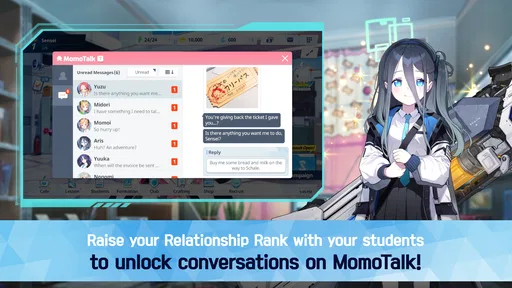
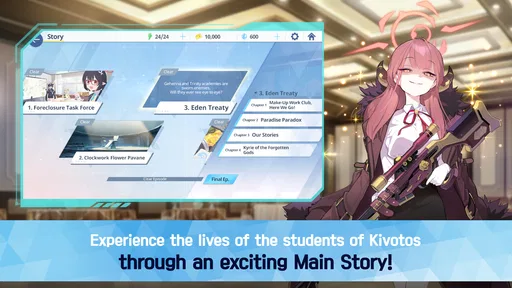
Blue Archive depends heavily on dialogue and character scenes. That is good news for players who enjoy reading and want more context around their squad, but it changes the kind of concentration the game requires. The story is not just decoration between battles. It establishes personalities, relationships, conflicts, and the reason behind many missions.
I found the text easier to follow when playing in a quiet setting and using short sessions. During a commute or while multitasking, I was more likely to miss small details or lose track of who was speaking. Anyone who has difficulty reading dense dialogue, distinguishing voices through rapid exchanges, or maintaining attention across long scenes should expect to pause often. The ability to take the story at my own pace helped, but the overall amount of reading remains a meaningful commitment.
This also affects language comfort. Players who prefer games with minimal text may enjoy the battles but feel that the narrative slows them down. On the other hand, readers who like anime-style character writing may see the dialogue as the main reason to continue. I would not recommend skipping every scene automatically, because doing so removes much of what makes this particular RPG different from a straightforward auto-battler.
Learning the battle screen without visual overload
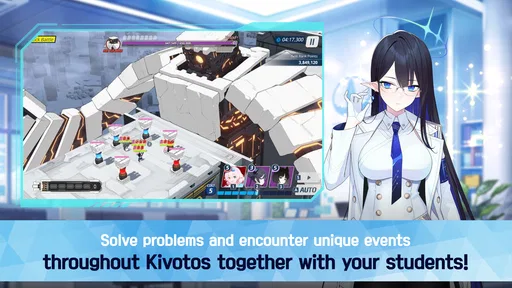
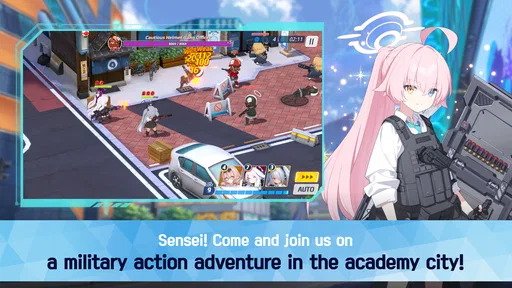
The combat presentation is lively, with animated characters and ability effects drawing attention to the action. That energy makes victories feel satisfying, but it can make it harder to notice small changes during a crowded encounter. I learned to focus on the ability bar and the condition of my squad instead of trying to watch every animation.
A useful approach is to decide what I am watching for before a fight begins. If the goal is to protect a fragile character, I watch the team’s health and defensive options. If the goal is to defeat a particular enemy quickly, I concentrate on ability timing. This selective attention is more manageable than attempting to interpret every effect on screen.
Players who are sensitive to flashing visuals, rapid movement, or layered sound should be cautious. I would test the game in a comfortable environment and reduce distractions around the device. The presentation is part of its appeal, but it is also one of the areas where personal sensitivity matters most.
Playing with different motor, sensory, and situational needs
I approach accessibility here as a matter of fit rather than a simple yes-or-no judgment: the game’s planning and repeat play can ease some demands, while its dense screens and animated battles may add others. I’ll focus on practical ways to judge those trade-offs in your own setting. From there, the next section considers how motor, sensory, and situational needs shape the experience.
Motor demands are usually about timing and precision
Blue Archive is not a game built around constant fast movement or a virtual joystick. That makes it less physically demanding than an action RPG that expects continuous aiming, dodging, and camera control. Much of the experience involves selecting commands, arranging a squad, and choosing when to activate abilities. For me, this made the game comfortable in short sessions and easier to play with one hand when I was not deeply managing a complicated fight.
That does not mean the game is effortless for every player. Tapping small controls, switching between menus, and reacting before an opportunity disappears can still be difficult for someone with limited dexterity, tremors, or fatigue. The challenge is not usually sustained button mashing; it is accurate selection at the right moment. A larger phone or tablet may make the interface more comfortable, while a smaller screen can make crowded controls feel less forgiving.
My practical advice is to avoid playing difficult battles when rushed. The game is more manageable when I prepare the squad first, identify the abilities I expect to use, and keep my hands in a stable position. That preparation reduces unnecessary tapping and turns some of the pressure into a planning exercise.
Automation helps, but it does not remove every decision
One of the more important trade-offs is the difference between convenience and control. Blue Archive can feel suitable for players who do not want to manually direct every second of a battle, particularly when repeating familiar content. That makes it useful during a short break or when I am tired and only want to collect progress.
However, relying on automation is not the same as making the game fully hands-off. Squad composition, character growth, and the decision to attempt a difficult mission still require attention. A weak team cannot always be rescued by letting a battle run on its own. I found the best workflow was to use convenience options for routine stages and reserve manual attention for encounters where timing or team balance mattered.
This distinction is especially relevant for players with motor limitations. Automation can reduce repeated input, but it does not guarantee that every part of progression will be equally accessible. The game still expects the player to understand its systems and intervene when a strategy fails.
Sound and visual information are not interchangeable
The anime presentation communicates a lot through movement, color, character expressions, and combat effects. That style is attractive, but it means that players who cannot comfortably process visual clutter may need more time to determine what is happening. Likewise, anyone who plays with sound muted should be prepared to rely more heavily on the screen and written information.
I often preferred lower-volume play because it let me concentrate on the text and battle layout. Players who benefit from audio cues may enjoy the atmosphere more with sound enabled, while those who need a quieter experience can still engage with the strategic layer. I would not treat either approach as automatically superior. The important point is that the game presents information through several overlapping channels, and some scenes are easier to understand when one channel is not competing with another.
For people sensitive to intense colors or rapid effects, the safest routine is to begin with brief sessions and observe how the presentation feels. The game’s visual identity is central to its appeal, so someone seeking a restrained, low-stimulation interface may be happier with a simpler role-playing game.
Why the game works well in ordinary daily situations
Blue Archive fits certain real-life routines better than others. I found it suitable for a short evening session when I wanted a mixture of story and light planning rather than a demanding competitive match. It can also work during a break if I already know what I want to accomplish, such as checking character development or completing familiar missions.
A realistic example would be playing after work while waiting for dinner. I can review the squad, improve a character, run a familiar stage, and stop without needing to finish a long real-time match. That flexibility is one of the game’s practical strengths. It is less suitable when I am distracted by conversation, moving between places, or using a weak connection, because story reading and menu decisions need more attention than the short battles might suggest.
The mature rating also affects where and with whom I would play. I would not hand it to a child simply because its characters and colors look cheerful. Adults should consider the tone and spending model before installing it on a shared device or recommending it to a younger player.
Spending pressure is an access issue as well as a budget issue
The free entry point is helpful, but the purchase range means that financial boundaries should be decided before playing. In my experience, the most comfortable way to approach a game like this is to treat purchases as optional from the beginning rather than waiting until a difficult stage creates frustration.
That matters for players who are vulnerable to impulse spending, but it also matters for anyone who wants a predictable experience. A player who is happy to progress slowly may find the game enjoyable without paying. Someone who wants immediate access to a broad roster or faster development may feel more pressure. The better alternative for that second type of player may be a premium RPG with a one-time price, even if it offers fewer characters or less ongoing content.
I also recommend separating the enjoyment of the story from the urge to optimize the strongest possible squad. Those are different goals. If I focus on favorite characters and steady progress, the game feels more personal. If I chase efficiency and constant improvement, the purchase system becomes much harder to ignore.
Where the remaining barriers become most noticeable
The largest barrier is the amount of information the game expects the player to absorb. A newcomer may need to understand character roles, resources, upgrades, team combinations, mission requirements, and story progression while also learning the interface. This is not a problem unique to every RPG, but Blue Archive places particular weight on its cast and development systems.
Another barrier is the gap between a visually friendly presentation and a mechanically layered experience. The characters may make the game appear immediately approachable, yet the long-term loop rewards players who are willing to study details. Someone looking for a simple game to open and understand in seconds may become frustrated before the story has a chance to work.
The low average rating should also encourage realistic expectations. I would not interpret it as proof that the game is universally poor, but I would take it as a reason to avoid assuming that the experience will suit every device or every player. The current version is 1.93.454564, and players should keep their game updated through the normal platform process before judging performance or stability.
Compared with a traditional single-player RPG, Blue Archive offers a more ongoing character-collection routine and a stronger emphasis on managing a roster. Compared with a fast action game, it asks for less continuous physical control but more menu reading and planning. Compared with a simple idle RPG, it gives me more room to think about team choices and story, while demanding more attention in return. Those comparisons make the audience clearer: it is for players who want an anime cast and long-term progression, not for people seeking a compact, one-off adventure.
Who should try it, and who should skip it
I would recommend Blue Archive to an adult player who enjoys character-driven anime stories, squad building, and battles that can shift between convenience and manual decision-making. It is especially appealing if you like checking in regularly, improving familiar characters, and finding a team arrangement that works better than simply choosing the newest option.
I would suggest skipping it if you dislike reading, crowded interfaces, collectible-character systems, or any possibility of purchase pressure. It is also a poor match for someone who wants a fully offline-feeling RPG with a clear beginning and end. Players who need a very calm visual presentation or extremely simple controls should test it cautiously rather than assuming that its cute art means low complexity.
For people with accessibility needs, I see the game as mixed but potentially workable. The absence of constant action controls can reduce physical strain, and repeatable routines can make short sessions practical. At the same time, dense menus, small targets, extended reading, and animated combat can create barriers. The best experience depends on the player’s device, visual comfort, reading stamina, and ability to set a personal spending limit.
My inclusive verdict after playing
Blue Archive has a distinctive balance: it is visually energetic but not always easy to scan, strategically approachable but layered over time, and convenient in short bursts while still asking for sustained attention during story and roster management. I appreciated that I could choose between careful planning and a more relaxed routine, but I never forgot that the game’s depth comes with extra reading and menu work.
For me, the strongest use case is a quiet, regular session in which I can read a scene, adjust a squad, and complete a few missions without rushing. The weakest use case is playing while distracted or expecting every activity to be equally simple. The free price makes trying it straightforward, but the mature rating and purchase range deserve serious consideration before recommending it to someone else.
My final view is cautiously positive for the right audience. The game is most inclusive when I treat it as a flexible, text-heavy RPG rather than a quick anime action title. If you enjoy its characters and are comfortable learning a busy system, it can become a rewarding routine. If clear interfaces, minimal reading, quiet visuals, or fixed-cost progression matter more to you, another role-playing game will probably be a better choice.
Verdict
Strengths of Blue Archive
- Engaging turn-based combat with accessible mechanics and tactical depth.
- Large cast of characters with distinct roles, personalities, and upgrade paths.
- Frequent events and story updates help keep the experience fresh.
- Stylish anime presentation with expressive character animations.
- Generous beginner rewards make it easier to build an initial team.
Limitations of Blue Archive
- Gacha progression can require significant time or spending for specific students.
- Energy limits may interrupt longer play sessions.
- Some menus and systems feel overwhelming for new players.
- Later content can demand carefully optimized teams and equipment.
- The download and update size may be substantial on some devices.
Other Releases by NEXON Company
View All
KartRider Rush+
Racing3.8

MapleStory M - Fantasy MMORPG
Role Playing4.4

MapleStory : Idle RPG
Role Playing4.4
Similar Picks in This Category
View All
Hair Dye
CrazyLabs LTD4.4

Monster High™ Beauty Salon
CrazyLabs LTD4.5

Bus Simulator - Bus Games 3D
Jima Apps4.4

Flight Pilot: 3D Simulator
Wildlife Studios4.1


Super Stylist Fashion Makeover
CrazyLabs LTD4.4
Frequently Asked Questions
What is Blue Archive, and what kind of game is it?
Blue Archive is a free-to-play mobile role-playing game with anime-style visuals, turn-based squad battles, and a story centered on students and school clubs in the city of Kivotos. You collect characters, improve their skills and equipment, complete missions, and follow numerous story chapters. The game combines tactical combat with social interactions, character episodes, and lighthearted slice-of-life moments.
Is Blue Archive free to download and play?
Yes, Blue Archive can be downloaded and played for free on compatible Android and iOS devices. However, it includes optional in-app purchases, mainly for obtaining resources, costumes, and character recruitment opportunities. Progress is possible without spending money, although free players may need more patience when managing limited resources, completing events, and building teams for challenging late-game content.
Does Blue Archive require an internet connection?
Blue Archive generally requires a stable internet connection because it is an online game that synchronizes your account, story progress, events, missions, and character data with its servers. You should expect to download additional files after installation, and some updates can be sizable. Playing over Wi-Fi is recommended, especially when installing the game or downloading new content.
Is Blue Archive suitable for children?
Blue Archive features colorful anime artwork and school-themed characters, but its recommended age rating may vary by region and platform. Some character designs, dialogue, themes, and story situations may not be appropriate for younger children. Parents should check the current store rating, review the game’s content, and consider the presence of online features and optional purchases before allowing a child to play.
How demanding is Blue Archive, and how much storage does it need?
Blue Archive runs on many modern Android and iOS devices, but performance depends on your phone or tablet’s processor, memory, operating system, and available storage. The initial download is only part of the requirement because additional voice files, story data, events, and updates are installed later. Keeping several gigabytes free and closing other demanding apps can help reduce crashes and loading problems.
Play our best games!


